
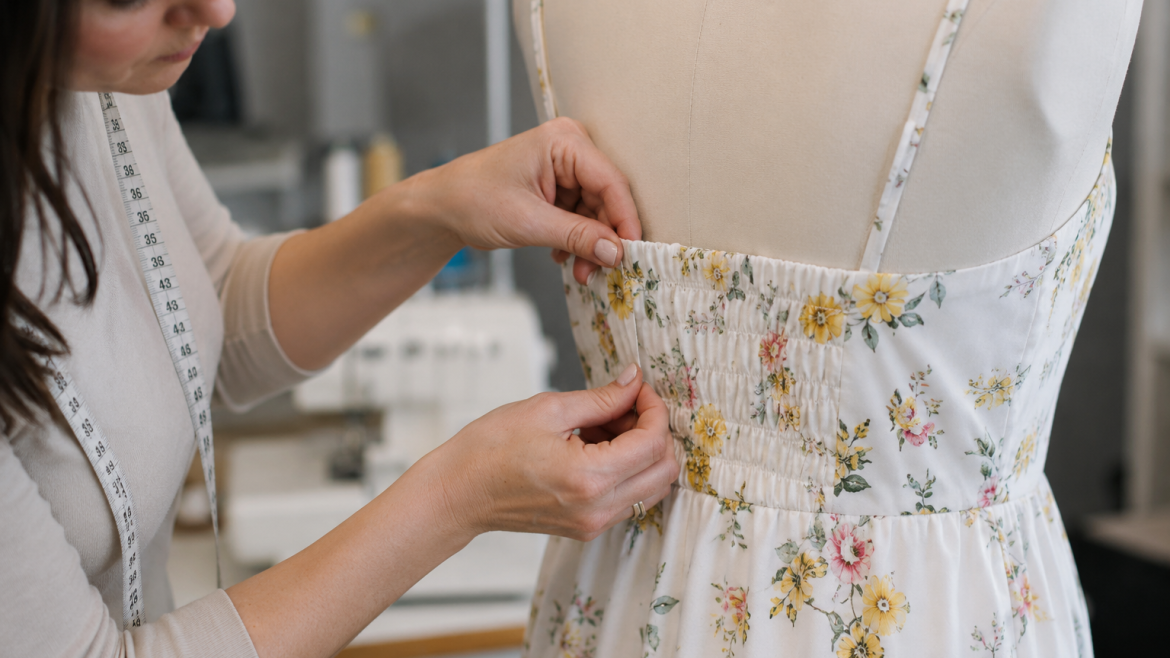
You found it. The color, the cut, the way it photographs – all of it. But the moment you actually wear it out into the world, something feels slightly wrong. The neckline doesn’t sit where it should. The waist drifts. The hem catches underfoot at the worst moments. You convince yourself you just need to get used to it, but you never quite do.
That feeling has a name: it’s not a bad dress. It’s an unaltered dress. And almost every fit frustration has a specific fix. Not a workaround, but an actual solution that takes the dress you almost love and makes it one you reach for without thinking twice.
This guide walks through the most common fit problems with which women deal, and exactly which alteration solves each, including realistic turnaround times and what to expect cost-wise.
Strap Shortening
When the Neckline Sags and the Bodice Pulls Away
You’ve worn this dress before. You know exactly what’s going to happen. By the end of the night, you’ll have adjusted the neckline at least a dozen times.
Spaghetti straps and thin shoulder straps that are too long throw everything off. The front neckline sags. The bodice drifts forward from where it’s supposed to sit. And no matter how many times you pull it back into place, it won’t stay.
The fix: Shortening the straps at the back attachment point. This single adjustment lifts the front neckline and brings the bodice back to its designed position. The effect is immediate and usually dramatic.
Most women don’t realize the neckline is a strap-length problem. They assume the dress just doesn’t work for their body. In most cases, it’s a 20-minute alteration.
What to Know Before Your Appointment
Bring the dress on a hanger and wear the bra (if any) you plan to wear with it. Strap length is adjusted to your actual undergarment. What you wear underneath changes where everything sits. Skip this step, and the adjustment may need to be redone.
Side Seam or Dart Adjustment
When the Waist Bags and the Dress Look Shapeless
The shoulders fit. The hips fit. But through the middle, the dress just… hangs. You spend the day pulling it back into place, tying a belt over it, or avoiding mirrors.
A dress that fits everywhere except the waist creates a formless silhouette, and no amount of accessorizing changes that.
The fix: Taking in the side seams through the waist creates shape through the torso without changing the neckline, hem, or overall design. For dresses without side seams, a skilled tailor adds darts at the back of the bodice instead – same result, different technique.
The same fabric. The same color. When it follows your body instead of draping away from it, the dress reads entirely differently.
Works well on: Crepe, ponte, and woven cotton
Heads up on fabric: Very stretchy jersey fabrics require a different approach than structured fabrics. A good tailor will assess this before touching the seams; if yours doesn’t mention it, ask.
When a Belt Isn’t the Answer
Wearing a belt to compensate for a loose waist is a workaround, not a solution. It shifts where the fabric gathers rather than correcting the fit itself. A dart or side seam adjustment gives you the same defined waist without needing an accessory to hold the dress together, and lets the dress work on its own.
Shortening to the Right Length
When the Hem Is Too Long and Makes Every Step Awkward
One wrong step and you’re on the hem. Again. A dress that drags or catches underfoot doesn’t just look off; it creates a low-grade anxiety that runs through the whole event. You’re not thinking about the conversation. You’re counting how many times you’ve stepped on your own dress.
The fix: Hemming the dress to the right length for your height and the shoes you’ll wear with it. For straight hems, this is fast and affordable. For flared, A-line, or circular skirts, more fabric work is involved.
One rule: Bring the shoes. The actual shoes, with the heel height you plan to wear. A hem measured for flats will be wrong for heels. If you plan to wear the dress with multiple heel heights, talk to your tailor about whether a compromise length works or whether the dress has one natural pairing.
In Orlando, where garden weddings, outdoor dining, and warm-weather events are common year-round, a hem that clears the ground by the right margin isn’t optional; it’s the difference between enjoying the event and managing your dress through it.
The Multi-Occasion Dress Question
If you’re hemming a dress you plan to wear in multiple settings, say, a midi length that works for brunch but needs to work for a wedding, too, tell your tailor up front. Some dresses can be hemmed to a length that works across occasions. Others have a single right answer. Knowing your use case before the appointment saves a second trip.
Asymmetric Adjustments
When the Chest or Bust Fits Differently on Each Side
The dress fits on the left. On the right, it gaps. Or pulls. Or just sits slightly wrong in a way you can’t put into words, but can’t stop noticing.
This is one of the most common fit issues with which women deal, and one of the least talked about. Bodies aren’t perfectly symmetrical. Off-the-rack sizing can’t account for that. The result is a dress that looks off, with no obvious explanation.
The fix: A skilled tailor pins each side independently and makes separate corrections for the left and right. This is a standard part of fitting, not a special request. The adjustments address your specific variation without altering the parts of the dress that already fit.
Requires: An in-person fitting, not something that can be assessed remotely. This cannot be done by phone or message. The tailor needs to see the dress on your body. Any shop that quotes this alteration without a fitting first isn’t doing it right.
Why “It Just Doesn’t Work for My Body” Is Usually Wrong
Most women who’ve dealt with asymmetric fit have quietly decided the dress doesn’t suit them and moved on. That’s an expensive conclusion, and usually inaccurate. A targeted asymmetric adjustment is often what separates a dress that feels forced from one that reads as genuinely fitted. The dress didn’t fail. It just needed separate corrections on each side.
Taking In at the Back Closure
When the Back Zipper Gaps or the Dress Won’t Close
The zipper goes up, but only partway. Or it closes, but the fabric gaps at the top and every movement makes you wonder if today is the day it gives out.
This particular fit problem comes with its own specific kind of stress. You’re not just uncomfortable. You’re waiting for something to go wrong.
The fix: Taking in the dress at the back closure, either at the side seams or through a back seam adjustment, reduces the gap and lets the zipper close cleanly without strain. Done correctly, the closure sits flat, and the bodice relaxes into the right position.
Especially relevant for: Structured formal dresses and wedding dresses
One important note: The zip closure is structural. An adjustment here affects how the entire bodice sits. A skilled tailor should assess whether the issue is primarily at the closure or in the bodice itself. Don’t skip the in-person assessment on this one.
For Brides and Formal Occasion Dressing
For structured formal dresses and wedding dresses, particularly those with a corset or boned bodice, the back closure isn’t just about aesthetics. It’s about function. A boned bodice that can’t close correctly can’t do its job. This is an alteration worth addressing well in advance of the event, not the week before.
You Found the Right Dress – Now, Let’s Get You the Right Fit
A dress that almost fits is still a dress that doesn’t. If you’ve been adjusting the neckline all evening, stepping around a too-long hem, or avoiding a dress entirely because the zipper won’t cooperate, those are fit problems with real, specific solutions.
At Orlando Cleaners, we handle every alteration with attention to how the garment is actually constructed, not just where it needs to be taken in. If this is your first visit, we’ll walk you through exactly what the dress needs and what to expect before anything is touched.
From hemming and strap shortening to waist adjustments and back closure fixes, we work through the fit issue directly so the result holds up the way it should.
Bring the dress. Bring the shoes. We’ll take it from there. Walk-ins are welcome!
Visit Us at Any of Our On-Site Tailor Locations:
Heathrow
1210 S International Pkwy, Lake Mary, FL 32746
407.447.6167
Lake Nona
13864 Narcoossee Rd, Orlando, FL 32832
407.447.8886
Windermere (Lakeside)
7848 Winter Garden Vineland Rd, Windermere, FL 34786
407.614.2000
Winter Garden (Stoneybrook West)
15502 Stoneybrook West Parkway, Winter Garden, FL 34787
407.447.0993
Downtown Orlando (Parramore)
223 N Orange Blossom Trail, Orlando, FL 32805
407.481.2000
College Park